

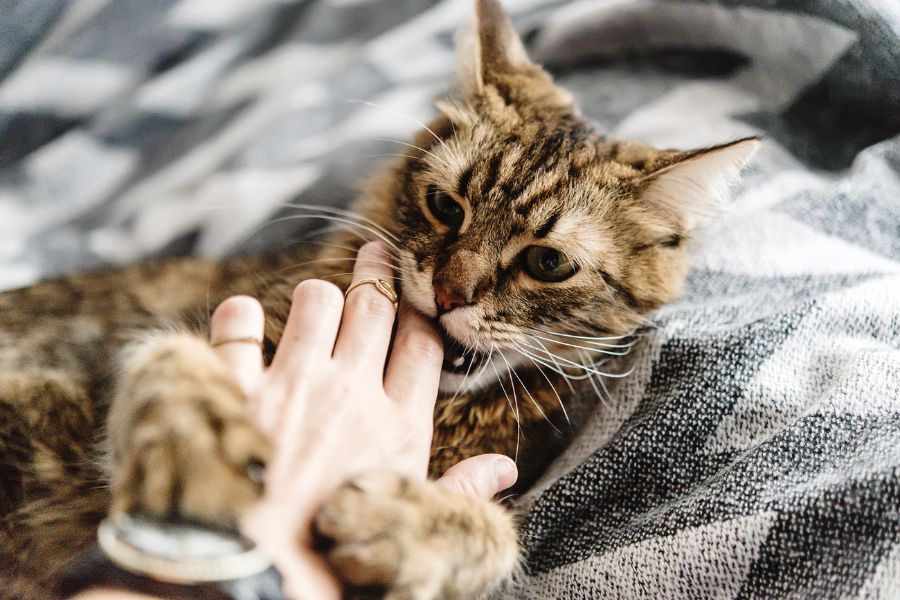
If you’ve ever wondered, “Why does my cat bite me?”, you’re not alone. Many pet owners experience this confusing behavior, especially when cats bite their owners unexpectedly during play or even while being petted. Understanding cat biting behavior is essential to building a safe and trusting relationship with your feline friend.
In this guide, we’ll break down the most common cat biting reasons, explain what your cat is trying to communicate, and share practical tips to prevent future bites.
Why Do Cats Bite Their Owners?
Cats bite for a variety of reasons, and it’s rarely about aggression alone. In most cases, biting is a form of communication. Unlike dogs, cats rely heavily on subtle signals—so when those signals are ignored, a bite may follow.
Some key triggers include:
- Overstimulation
- Fear or stress
- Play aggression
- Medical issues
Understanding these factors helps you respond appropriately instead of reacting with frustration.
7 Common Cat Biting Reasons You Should Know
1. Overstimulation During Petting
One of the most common reasons cats bite their owners is overstimulation. While your cat may initially enjoy being petted, repeated strokes, especially on sensitive areas, can quickly become overwhelming.
Signs to watch for:
- Tail flicking
- Ears turning sideways or back
- Sudden body tension
When you notice these signs, it’s best to stop petting immediately to avoid a bite.
2. Play Aggression
Cats are natural hunters, and sometimes your hands or feet become their “prey.” This is especially common in kittens or young cats with lots of energy.
Why does it happen:
- Lack of proper toys
- Too much hand-play as kittens
- Pent-up energy
Solution: Use interactive toys like feather wands instead of your hands to redirect their hunting instincts.
3. Fear or Anxiety
Fear is a major trigger behind cat biting behavior. A frightened cat may bite as a defense mechanism when they feel cornered or threatened.
Common causes:
- Loud noises
- New people or pets
- Sudden movements
Giving your cat a safe space to retreat can significantly reduce fear-based biting.
4. Redirected Aggression
Sometimes, cats bite unexpectedly because they’re frustrated by something they can’t reach, like another animal outside the window.
This is known as redirected aggression. Your cat isn’t upset with you specifically, but you happen to be nearby when their frustration peaks.
Tip: Avoid approaching your cat when they’re visibly agitated or focused on something stressful.
5. Attention-Seeking Behavior
Yes, cats can bite to get your attention. If your cat has learned that biting results in a reaction—feeding, playtime, or even scolding—they may repeat the behavior.
How to manage it:
- Ignore mild bites
- Reward gentle behavior
- Stick to consistent feeding and play schedules
6. Pain or Medical Issues
If your cat suddenly starts biting without a clear reason, it may be experiencing pain or discomfort. Issues like dental disease, arthritis, skin irritation, or internal illness can make touch feel unpleasant. Cats often hide pain, so biting becomes a warning sign. A veterinary checkup can help identify and treat the underlying problem early.
7. Learned Behavior from Kittenhood
Cats that weren’t properly socialized as kittens may not understand that biting humans is inappropriate. If they were allowed to bite during play early on, they may carry that habit into adulthood.
What you can do:
- Set boundaries consistently
- Use positive reinforcement
- Avoid rough play with hands
Why Do Cats Bite Unexpectedly?
When cats bite unexpectedly, it’s usually because subtle warning signs were missed. Cats rarely bite “out of nowhere,” they just communicate differently than we expect. Learning your cat’s body language is the best way to prevent sudden bites.
How to Stop Cat Biting Behavior
1. Recognize Early Warning Signs
Understanding your cat’s signals can prevent most biting incidents. Watch for:
- Tail lashing
- Flattened ears
- Dilated pupils
2. Use Proper Play Techniques
Always use toys instead of your hands. This teaches your cat that biting skin is not acceptable.
3. Avoid Punishment
Punishing your cat can increase fear and worsen biting behavior. Instead, focus on redirecting and rewarding positive actions.
4. Provide Mental and Physical Stimulation
Bored cats are more likely to develop unwanted behaviors. Keep your cat engaged with:
- Puzzle toys
- Regular play sessions
- Climbing structures
5. Maintain Routine
Cats thrive on consistency. Feeding, playtime, and sleep schedules should remain predictable to reduce stress-related biting.
When Should You Be Concerned About Cat Biting?
Occasional playful bites are normal, but frequent or aggressive biting may signal a deeper issue.
Seek veterinary help if:
- Biting increases suddenly
- Your cat shows signs of pain
- Behavior becomes aggressive or unpredictable
Early intervention can prevent more serious problems and ensure your cat stays healthy and happy.
In such cases, a veterinary visit is essential. Veterinary Clinics in Moberly, like Green Hills Veterinary Clinic, can help identify underlying health issues through proper diagnostic care.
Conclusion:
Understanding why cats bite their owners is the first step toward preventing it. Whether it’s overstimulation, fear, or play aggression, each bite has a reason behind it. By learning your cat’s body language and addressing the root cause, you can reduce cat biting behavior and strengthen your bond.
If your cat’s biting seems unusual or linked to discomfort, don’t wait; schedule a veterinary checkup at Green Hills Veterinary Clinic today. Early care can make all the difference in keeping your feline companion safe and stress-free.
FAQs
Q1: Why does my cat bite me while purring?
Ans: Cats may purr and bite due to overstimulation. They enjoy the interaction but reach a threshold where it becomes too much, leading to a gentle warning bite.
Q2: Is it normal for cats to bite their owners during play?
Ans: Yes, but it should be mild. Strong or frequent bites during play indicate poor boundaries or excess energy that needs redirecting with proper toys.
Q3: How can I train my cat to stop biting?
Ans: Use positive reinforcement, avoid hand play, and stop interaction immediately when biting occurs. Consistency is key to changing cat biting behavior.
Q4: Why do cats bite unexpectedly without warning?
Ans: Cats rarely bite without warning. Subtle signs like tail flicking or ear movement are often missed, making the bite seem sudden.
Q5: Should I be worried if my cat suddenly starts biting?
Ans: Yes, sudden biting can indicate pain or illness. A veterinary checkup is recommended to rule out underlying medical conditions.