
A bright red lump suddenly appearing in the corner of your dog’s eye is alarming. Most pet owners mistake it for an injury or infection. In most cases, it is cherry eye in dogs, a condition that looks scary but is very treatable when caught early. The good news is that with prompt veterinary attention, most dogs recover well and return to their normal, happy selves. This article covers what cherry eye is, why it happens, how to spot it, and what your vet will do to fix it. If your dog has something red and swollen near their eye, keep reading.
What Is Cherry Eye in Dogs?
Cherry eye happens when a dog’s third eyelid gland slips out of its normal position. Dogs have three eyelids. The third one sits in the inner corner of the eye and contains a gland that produces about 30 to 35 percent of the eye’s tear film.
When the ligament holding that gland weakens or fails, the gland pops out and becomes visible as a round, red mass. It looks a lot like a small cherry, which is where the name comes from.
This condition is not just cosmetic. An exposed gland becomes inflamed, irritated, and prone to infection. Left untreated, it can lead to chronic dry eye and long-term vision problems. Many dogs we see with untreated cherry eye develop painful dry eye within a year of the prolapse.
An estimated 40 percent of dogs with cherry eye in one eye will eventually develop it in the other eye too. Early treatment matters.
Signs of Dog Eye Problems That Could Be Cherry Eye
Spotting cherry eye early gives your dog the best chance at a smooth recovery. The signs are usually hard to miss once you know what to look for.
Watch for these symptoms:
- A red or pink mass in the inner corner of the eye: This is the most obvious sign. It may appear suddenly or grow gradually over a few days.
- Excessive tearing or eye discharge: The exposed gland cannot function normally, which disrupts tear production and causes overflow.
- Your dog pawing at their eye: Discomfort from the prolapse causes dogs to rub or scratch at the area.
- Redness or swelling around the eye: Surrounding tissues become inflamed when the gland is exposed.
- Squinting or keeping the eye partially closed: This is a pain response. A dog that squints consistently needs to be seen promptly.
Pet owners often tell us they thought the redness was a scratch or bug bite before realizing the mass was actually part of their dog’s eye. If you notice any of these signs, contact your veterinarian promptly. These signs of dog eye problems should never be dismissed as minor or temporary.
What Causes Cherry Eye and Which Dogs Are Most at Risk?
Cherry eye in dogs is caused by a weakness in the connective tissue that anchors the third eyelid gland. That weakness is largely genetic.
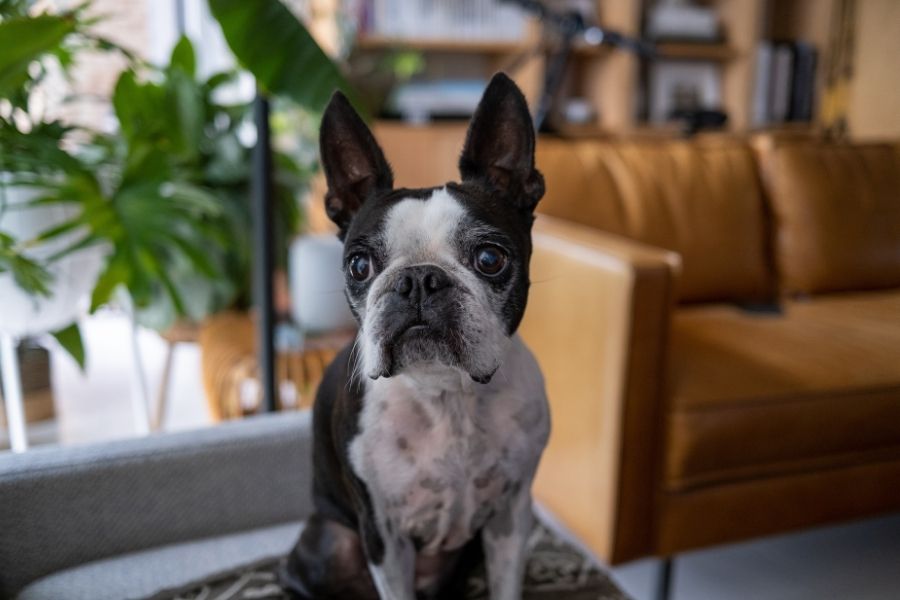
Certain breeds carry a much higher risk. Brachycephalic breeds with flat faces, such as Bulldogs, Boston Terriers, French Bulldogs, and Shih Tzus, are among the most commonly affected. Cocker Spaniels, Beagles, Bloodhounds, and Basset Hounds also appear frequently in our exam rooms for this condition.
Age plays a role too. Cherry eye most often shows up in dogs under two years old. Younger dogs have less developed connective tissue, which makes the gland more vulnerable to slipping.
In Missouri, we see this condition year-round with no strong seasonal pattern. However, dogs that rub their faces against rough surfaces, play roughly, or experience any trauma around the eye area may be more likely to trigger a prolapse if they already have a genetic predisposition.
Environmental irritants like dust and pollen can also cause eye irritation that leads to excessive rubbing, which in turn increases the risk in susceptible dogs.
How Is Cherry Eye Diagnosed and Treated?
Cherry eye is typically diagnosed by visual examination alone. The red mass in the inner corner of the eye is usually unmistakable. Your vet will also assess whether the gland is still functional and check for signs of secondary infection or dry eye.
Treatment follows a clear process:
- Confirm the diagnosis: Your vet examines the eye and rules out other conditions such as a tumor or conjunctival cyst.
- Evaluate gland health: The condition of the gland determines which surgical approach is best.
- Surgical repositioning: The standard treatment is a surgical procedure that repositions the gland back to its correct location. Most vets use a technique called the pocket technique or the imbrication technique, depending on the case.
- Post-operative care: Your dog will go home with antibiotic eye drops and an e-collar to prevent rubbing.
- Follow-up visit: A recheck confirms the gland is healing properly and staying in place.
Surgery has a high success rate. Most dogs recover fully within two to three weeks. The prolapsed nictitans gland dogs experience can almost always be corrected without removing the gland. Gland removal is now considered a last resort because it dramatically increases the risk of dry eye later in life.
In our experience, owners who follow post-op care instructions closely see the fastest and cleanest recoveries.
Dog Eye Surgery Recovery and Home Care Tips
Recovery from cherry eye surgery is straightforward when owners stay consistent with aftercare. Here is what to do at home to support healing.
- Keep the e-collar on at all times: Even a few minutes of rubbing can undo the surgical repair. Do not remove the cone until your vet gives the all-clear.
- Apply eye drops as directed: Antibiotic and anti-inflammatory drops are critical for reducing swelling and preventing infection. Do not skip doses.
- Limit rough play and exercise: Keep activity calm for at least two weeks. No wrestling with other dogs, no running through brush.
- Check the eye daily: Look for increased redness, swelling, or discharge. If anything looks worse, call your vet the same day.
- Attend all follow-up appointments: Dog eye surgery recovery depends on consistent monitoring. A missed recheck can mean a missed complication.
One common misconception is that cherry eye will go away on its own if you massage the area. Some older online guides suggest manual repositioning. This does not work long-term and delays treatment. The gland will not stay in place without surgical correction.
At Green Hills Veterinary Clinic, we provide complete veterinary care for dogs across every stage of life, from puppies prone to cherry eye to senior dogs managing chronic conditions. Our team is here to help your dog see clearly and feel their best.
Conclusion
Cherry eye in dogs is one of those conditions that looks far worse than it is. A red mass in your dog’s eye is startling, but with the right treatment it is very manageable. The key is acting quickly, avoiding the temptation to wait it out, and following through with proper post-operative care. The prolapsed nictitans gland dogs deal with can be corrected with a high success rate when treated by an experienced veterinarian. If your dog is showing any signs of eye trouble, do not delay. The team at Green Hills Veterinary Clinic is ready to help. Book an appointment today.
Frequently Asked Questions
Q: What does cherry eye look like in dogs?
Ans: Cherry eye appears as a round, red or pink mass in the inner corner of your dog’s eye. It is caused by the third eyelid gland slipping out of its normal position and becoming visible. It can appear suddenly and may grow larger if left untreated.
Q: Will cherry eye in dogs go away on its own?
Ans: No. Cherry eye does not resolve without treatment. Manual massage may temporarily push the gland back, but it will prolapse again. Surgical repositioning is the only reliable long-term solution.
Q: Is cherry eye painful for dogs?
Ans: Cherry eye causes discomfort, not severe pain in most cases. The exposed gland becomes inflamed and irritated, which is why dogs often paw at the eye or squint. Over time, untreated cherry eye can lead to chronic dry eye, which is painful.
Q: What breeds are most prone to cherry eye?
Ans: Bulldogs, French Bulldogs, Boston Terriers, Shih Tzus, Cocker Spaniels, Beagles, and Basset Hounds are among the most commonly affected breeds. The condition has a genetic component and most often appears in dogs under two years old.
Q: What happens if cherry eye is left untreated?
Ans: An untreated prolapsed gland becomes chronically inflamed and loses its ability to produce tears. This leads to dry eye, a painful condition that requires lifelong management. Early surgical treatment is the best way to protect your dog’s long-term eye health.