
Accurate and Timely Diagnostic Care for Your Pet
As a pet owner, it can be stressful when your furry friend is not feeling well. You want to make sure they receive the best care possible, and that includes accurate and timely diagnosis. That’s where veterinary diagnostic care comes in. With advanced technology such as X-rays, ultrasound, and in-house laboratory services, we can quickly and accurately diagnose your pet’s health issues.
Veterinary diagnostic care encompasses a range of services, including X-rays, ultrasound, and in-house laboratory testing. These services are essential for identifying and diagnosing a variety of health issues in pets.

X-Rays
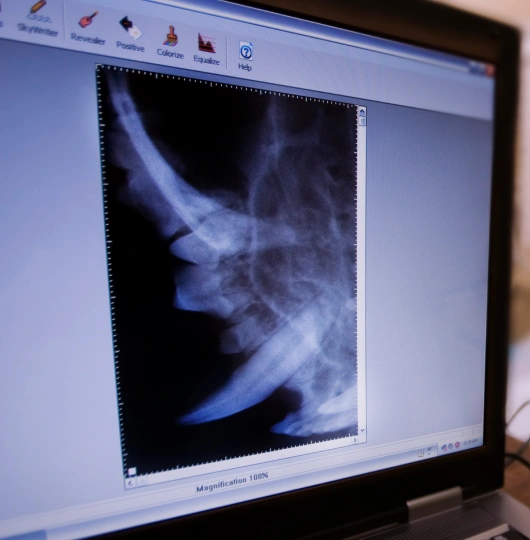
X-rays, also known as radiographs, use low levels of radiation to produce images of your pet’s bones and internal organs. X-rays are non-invasive and can be performed quickly, making them a valuable tool in diagnosing your pet’s health issues.
Ultrasound
Ultrasound uses high-frequency sound waves to produce images of your pet’s internal organs and soft tissues. This non-invasive procedure can provide more detailed images than X-rays, making it useful for detecting issues such as bladder stones, tumors, and heart conditions. Ultrasounds are also safe for pregnant pets, making them a valuable tool for monitoring the health of both the mother and her unborn offspring.
Parasite Testing
Parasite testing is the process of examining a pet’s feces or blood for the presence of parasites. This is typically done during a routine wellness exam or if your pet is showing symptoms of a parasitic infection. The most common parasites found in pets include roundworms, hookworms, tapeworms, and heartworms. These parasites can cause a range of health issues, from mild discomfort to life-threatening conditions.
In-House Laboratory
In-house laboratory testing allows for quick and accurate results for a variety of diagnostic tests. This means that your pet can receive a diagnosis and begin treatment sooner, leading to better outcomes.

Heartworm Testing
Heartworm testing is a simple blood test that checks for the presence of heartworms in your pet. Heartworms are parasitic worms that can live in the heart, lungs, and blood vessels of infected animals. They are transmitted through mosquito bites and can cause serious health issues for your pet if left untreated.
Why is Heartworm Testing Important?
Heartworm disease is a serious and potentially fatal condition that can affect both dogs and cats. It is much easier and less expensive to prevent heartworm disease than to treat it, making heartworm testing an essential part of your pet’s wellness routine.
Early detection through heartworm testing allows for prompt treatment, which can prevent further complications and potentially save your pet’s life. Additionally, many heartworm preventatives also protect against other parasites, making regular testing and prevention crucial for your pet’s overall health.
How is Heartworm Testing Performed?
Heartworm testing is a simple and quick process that can be done at our office. The test involves taking a small blood sample from your pet and testing it for the presence of heartworms.
FIV and FeLV Testing
Two common viruses that can impact cats are FIV (Feline Immunodeficiency Virus) and FeLV (Feline Leukemia Virus). These viruses can have serious consequences for your cat’s health, so it’s important to be aware of them and get your cat tested if necessary.
Early detection of FIV and FeLV can lead to early treatment, which can improve your cat’s quality of life and potentially extend their lifespan. If your cat is diagnosed with either virus, your vet can provide treatment options and recommendations for managing their symptoms.
How is FIV and FeLV Testing Done?
FIV and FeLV testing is typically done through a blood test and can be done in our hospital. We will take a small sample of blood from your cat. Unless we send the test to an outside lab, we can also run the test in-house and have results in about ten minutes.
When Should My Cat Be Tested?
It’s recommended that all cats be tested for FIV and FeLV at least once in their lifetime. This is especially important for outdoor cats or cats that have been in contact with other cats. If your cat is showing symptoms of FIV or FeLV, it’s important to get them tested as soon as possible.